Crypto Fees Explained: Maker, Taker, Funding, Hidden Costs
- 02/23/2026 05:06am
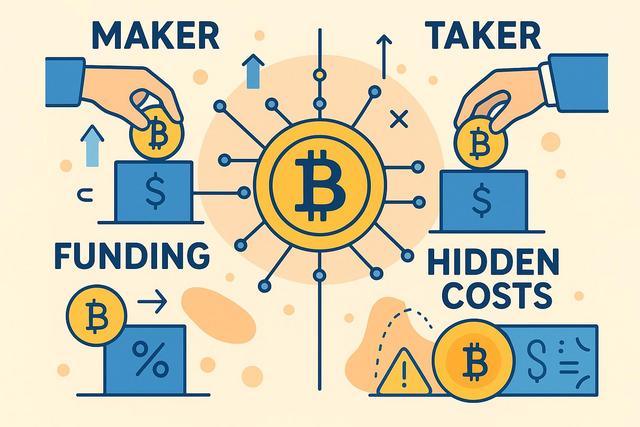
Crypto trading is a complex field, made even more challenging by the different fees that traders may encounter. Understanding these fees is essential for any trader seeking to minimize costs and maximize profits. In this comprehensive guide, we delve into the intricacies of maker and taker fees, funding rates, and the often-overlooked hidden costs associated with crypto trading.
Understanding Maker and Taker Fees
Maker and taker fees constitute a significant portion of the trading fees on most cryptocurrency exchanges. These terms describe two different roles in a trade order. A 'maker' creates liquidity by placing a limit order, while a 'taker' removes liquidity by fulfilling an existing order on the order book.
Maker Fees
Maker fees are typically lower than taker fees as exchanges incentivize traders to provide liquidity. For example, on popular exchanges like Binance and Coinbase, maker fees are reduced to encourage more participants to place orders that do not immediately match with an opposite order.
Taker Fees
Conversely, taker fees are generally higher because takers remove liquidity from the market. This encourages a balanced order book, a crucial component for a healthy trading environment. Taker fees can sometimes be higher due to the immediacy of order fulfillment as compared to maker transactions.
What Are Funding Rates?
Funding rates are a mechanism used by crypto exchanges to keep the prices of perpetual futures contracts closely aligned with the underlying asset price. Funding payments occur every few hours and are directly paid between traders.
How Funding Rates Impact Trading
Funding rates can either be positive or negative. When the funding rate is positive, traders holding long positions will pay short position holders, and vice-versa when negative. This process helps control the direction of market momentum.
Calculating and Managing Funding Costs
Traders can manage costs associated with funding rates by monitoring their positions and closing or hedging them when rates are unfavorable. Many exchanges, such as Bybit, provide detailed funding schedules and historical rate data.
Exploring Hidden Crypto Trading Costs
Beyond the explicit maker and taker fees, and funding rates, traders face several hidden costs that can eat into their profits.
Transaction Fees
Each trade involves network transaction fees that may vary depending on the cryptocurrency being traded. Platforms like Ethereum often have fluctuating gas fees impacting transaction costs.
Slippage
Slippage occurs when there's a discrepancy between the expected price of a trade and the actual price. This typically happens in times of high volatility or low liquidity.
Withdrawal Fees
Many exchanges charge withdrawal fees which can vary based on the cryptocurrency and the amount being transferred. It's advisable to account for these fees when calculating potential profits.
Strategies to Minimize Crypto Trading Costs
- Choose the Right Exchange: Opt for platforms with competitive fee structures for your trading style.
- Utilize Tiered Fee Structures: Some exchanges offer reduced fees for high-volume traders.
- Leverage Decentralized Exchanges (DEXs): DEXs often have lower fees as they eliminate intermediaries.
- Monitor Funding Rates: Adjust positions preemptively based on funding rate predictions to minimize unfavorable payments.
Conclusion: Mastering Crypto Trading Fees
To become proficient in crypto trading, it's crucial to understand the various fees involved in the processes. By being aware of maker, taker, funding, and hidden costs, traders can devise effective strategies to minimize expenses and enhance profitability. As the market continues to evolve, staying informed about the latest trends and changes in trading fees remains an essential practice for any serious trader.
For further details, explore resources like CoinMarketCap for comprehensive data and analysis on cryptocurrency market behaviors.

