Paper Trading: Mastering Realism in Simulated Markets
- 03/02/2026 05:06am
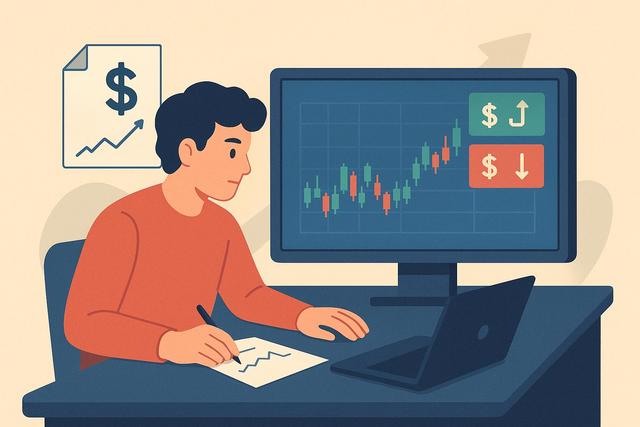
Paper trading presents an opportunity for traders to practice strategies without risking real capital. However, many fall into the trap of oversimplifying the process, leading to false confidence and suboptimal performance in real markets. By understanding how to simulate execution, slippage, and sizing, traders can better prepare for actual trading environments. This guide dives deep into the complexities of paper trading, providing actionable insights and strategies to ensure that your practice translates effectively into real-world trading.
Understanding Paper Trading
Paper trading is a practice used by traders to simulate live markets without risking actual money. Many platforms provide virtual trading environments that mimic the conditions of financial markets. However, accurate paper trading requires more than just executing trades without monetary stakes.
Definition and Purpose
Paper trading, often referred to as simulated trading, allows individuals to test trading strategies and tools in a risk-free setting. Its primary purpose is to enable traders to gain experience and confidence.
Why It Matters
Despite the lack of financial risk, paper trading offers substantial educational value. According to Investopedia, traders can spot flaws in their strategies, understand market dynamics, and adapt to different broker tools all without financial exposure.
A Common Misconception
Often, new traders underestimate the complexity of real trading by achieving unrealistic success through simplified simulations. This can lead to overconfidence, which is detrimental when actual money is on the line.
Importance of Realism
To be effective, paper trading must closely mirror real market conditions. Achieving this involves understanding key market concepts, such as execution, slippage, and position sizing.
Execution Realism
Execution involves how quickly and accurately trades are made once an order is placed.
Simulating Execution
Real-time market changes can impact trade execution timing. Traders can simulate execution lag by imposing a brief delay from the moment they decide to the point of trade execution. This mimics the reality of trading desks, where latency can affect order fulfillment.
Case Study: Latency Impact
Consider a trader practicing on the Thinkorswim platform. Although executions in their paper account happen immediately, real markets involve latency, which could mean the difference between a profit and a loss.
Accounting for Slippage
Slippage occurs when there's a difference between the expected price of a trade and the price at which the trade is executed.
Quantifying Slippage
Implement a fixed percentage of slippage into simulations. For high volatility stocks, platforms like TradingView suggest estimating slippage of at least 0.5% to 1%.
Real Example: Slippage in a Volatile Market
During the 2020 market crashes, slippage was commonly reported up to 2%, showcasing the critical need for accounting it in simulations.
Position Sizing Techniques
Position sizing refers to the number of units or contracts a trader decides to purchase.
The Art of Sizing
Though paper accounts may allow aggressive positions without immediate consequence, real-world constraints like margin limits should be considered.
Strategy Implementation
Utilize a fixed or variable percentage of your portfolio value to adhere to realistic sizing. Tools like MetaTrader 5 help simulate this by allowing traders to set portfolio constraints.
Example: Overleveraging
An overly aggressive position size might show great returns in a paper account yet result in significant losses in a real scenario due to market volatility or margin calls.
Psychological Considerations
Even in paper trading, emotions can cloud judgment and affect strategies.
Building Emotional Resilience
Create a realistic emotional environment by embedding consequences for simulated losses.
Practical Implementation
Set up a simulation rule: if a trade results in a significant paper loss, restrict access to the account temporarily to mimic mental strain of a 'cooling-off' period in real situations.
Emotional Insight
According to a study by the Journal of Behavioral Finance, traders who practice emotional resilience in their simulations tend to make more calibrated decisions in live accounts.
Advanced Tools and Platforms
Choosing the right platforms significantly impacts the proficiency of paper trading.
Leading Simulated Trading Platforms
- Interactive Brokers: Offers comprehensive market simulations with data-driven insights.
- eToro: Provides an intuitive paper trading environment with social trading capabilities.
Incorporating Analytics
Platforms equipped with analytical tools like AlgoTrader help integrate quantitative analysis into your practice routine.
Continuous Improvement and Feedback
Enhancing paper trading skills requires persistent refinement and strategic feedback loops.
Reviewing Trade Journals
Maintain a detailed trading journal to identify trends, evaluate decision-making processes, and adjust strategies accordingly.
Tools for Journal Maintenance
Utilize digital solutions like Edgewonk that cater to detailed journaling and analysis.
Strategic Evolution
Regularly review and evolve trading plans by analyzing journal data, focusing on both losses and victories to obtain a balanced perspective.
In conclusion, paper trading, if harnessed correctly, acts as a powerful educator in the financial markets. By focusing on execution realism, slippage, and position sizing, traders can simulate real-world conditions effectively. Complemented by robust emotional training and advanced platforms, paper trading becomes a strategic asset. Ensure continued improvement with feedback loops such as trade journals to transition successfully from simulation to live trading. Implement these insights methodically, maintaining a learning posture, and you'll bridge the gap between practice and reality seamlessly, eventually leading to informed and confident real-world trading.

