How to Trade Support and Resistance Zones for Maximum Profit
- 11/28/2025 05:06am
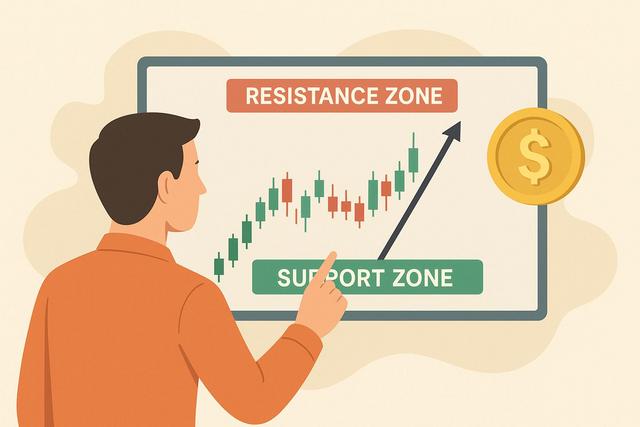
Trading in the financial markets requires a keen understanding of levels where price might potentially reverse or continue its trend. These levels, known as support and resistance zones, are critical for making informed trading decisions. In this comprehensive guide, we explore how traders can effectively identify and utilize these zones for optimal entry and exit points in various market conditions.
Understanding Support and Resistance Zones
Support and resistance levels are fundamental concepts in trading. But what exactly are they?
What is Support?
Support is a price level where a downtrend can pause due to a concentration of demand. As the price drops towards support, demand increases, thus preventing the price from dropping further. To put it simply, support acts like a 'floor' for the market. Investopedia offers a detailed explanation of how these levels are formed.
What is Resistance?
Conversely, resistance is a level where an uptrend can pause or reverse due to a concentration of selling interest. It acts as a 'ceiling' that holds the price from rising further. Traders often use resistance to time their exits or short entries. Here's a comprehensive guide on resistance levels.
How to Identify Support and Resistance Zones
Identifying these zones requires a combination of technical analysis and an understanding of market psychology. Here are some common methods:
Use of Historical Price Data
- Price Bar Analysis: Look for areas on the chart where prices bounced previously.
- Volume Profile: Identify areas with high trading volumes, as these often correspond to support or resistance.
Moving Averages
Moving averages can act as dynamic support or resistance levels. Typically, 50-day and 200-day moving averages are closely watched by traders. Check out this guide on the significance of moving averages.
Psychological Levels
Round numbers, like $100 in stock prices, often act as psychological barriers. Traders gravitate around these numbers, treating them as significant support/resistance.
Trading Strategies Using Support and Resistance
Leveraging support and resistance effectively can increase your odds of success in both trending and ranging markets.
Bounce Strategy
Traders can enter a buy trade when the price hits a strong support level and shows signs of bouncing.
- Steps:
- Wait for price to reach a well-tested support zone.
- Look for reversal candlestick patterns or confirmations, such as a bullish engulfing pattern.
- Enter the trade with a stop-loss below support.
Breakout Strategy
This involves waiting for the price to break through a support or resistance level, indicating a shift in market sentiment.
- Steps:
- Identify a major support or resistance level.
- Wait for a strong price movement breaking this level.
- Confirm with increased volume or other indicators.
A deeper dive into these strategies is available in this trading strategy guide.
Advanced Techniques for Trading Support and Resistance
For those looking to hone their trading skills, integrating advanced tools can provide better insights.
Fibonacci Retracement and Extensions
These tools help predict potential support and resistance levels based on historical price movements. Learn more about how Fibonacci levels can map future price action.
Using RSI for Better Signals
The Relative Strength Index (RSI) can help confirm support and resistance levels. An overbought signal near a resistance zone or an oversold signal near support can validate entries/exits.
Common Pitfalls to Avoid
Even seasoned traders can fall into traps when trading support and resistance. Here are a few to watch out for:
- Ignoring Confirmation: Always look for confirmation signals before entering a trade.
- Failing to Update Zones: Markets evolve; reassess zones periodically to ensure they remain relevant.
Conclusion: Mastering Support and Resistance
Trading with support and resistance zones is not only about spotting these levels but also understanding the underlying market psychology. Always practice due diligence, use tools judiciously, and refine your strategies with real market data. By honing these skills, traders can maximize profits and manage risks effectively.

