Value vs Growth in 2026: The Ultimate Decision Framework
- 04/15/2026 05:06am
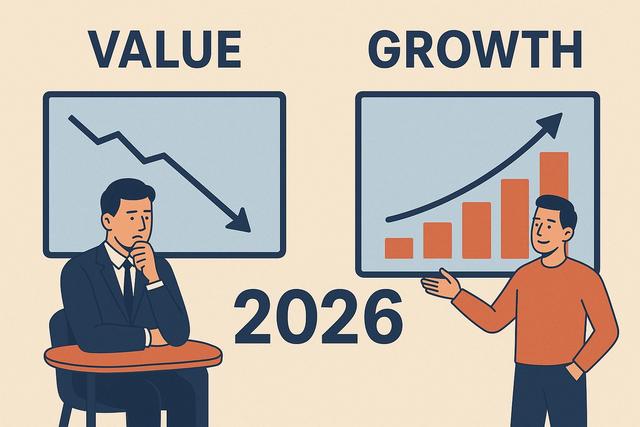
Navigating the tumultuous waters of financial investment often boils down to a pivotal decision between value and growth investing. As we approach 2026, various factors, including interest rates and economic forecasts, pose substantial effects on these investment styles. This article proposes a comprehensive framework for investors aiming to decide which style suits the anticipated macro environment.
Understanding Value and Growth Investing
Both value and growth investing are central to modern portfolio management. Value investing entails choosing stocks that appear undervalued by the market, while growth investing focuses on companies expected to increase their earnings at an above-average rate.
Real-World Examples
A quintessential example of value investing is Berkshire Hathaway under Warren Buffett, focusing on fundamentally strong companies trading below intrinsic value. Conversely, tech giants like Amazon and Tesla epitomize growth investing with earnings reinvested into scaling and innovation.
Data and Insights
According to a recent analysis by Goldman Sachs, value stocks have provided an average annual return of around 7%, compared to growth at approximately 9% over the last decade. Yet, these outcomes fluctuate significantly based on the broader economic context.
Strategic Insights
Investors should consider valuation ratios like P/E or the discounted cash flow model when evaluating investment opportunities. Tools like Morningstar offer in-depth analyses and can guide strategic allocation.
Impact of Interest Rates on Investment Styles
Interest rates are a critical determinant in financial markets, influencing both value and growth stocks differently.
Economic Context
Historically, growth stocks thrive in low-interest environments due to cheaper capital, as observed during the post-2008 monetary policy era. Value stocks tend to fare better when rates are higher, as seen in the late 1990s.
Forecast for 2026
As of recent Federal Reserve communications, the expectation is for a normalization of interest rates towards the end of 2026. This is likely to alter capital flows and investment preferences.
Actionable Insights
Investors should monitor Federal Reserve policy updates and incorporate forecasts into their investment strategy. Tools like Bloomberg provide real-time analysis and projections.
Assessing Market Valuation in 2026
Market valuation remains a pivotal consideration when deciding between value and growth.
Key Metrics
Valuation metrics such as the CAPE Ratio or Price-to-Sales Ratio can offer insights. According to Shiller, the CAPE Ratio has been hovering above historical norms, suggesting potential corrections.
Comparative Analysis
| Metric | Value Investing | Growth Investing |
|---|---|---|
| P/E Ratio | Lower Average | Higher Average |
| Dividend Yield | Higher | Lower or None |
| Earnings Growth | Stable | Dynamic |
Strategic Approach
Investors might employ tactical allocation, dynamically adjusting exposure based on market signals. Diversified funds such as ETFs offer a balanced approach.
Rotation Strategy: Timing Your Investments
Style rotation involves shifting investments from one style to another based on economic cycles.
Historical Context
Periods like the late 2000s crash saw a rotation to value as investors sought stability, while the tech boom of the 2010s favored growth.
S&P 500 Analysis
Analysis of S&P 500 trends reveals distinct cyclical patterns. Incorporating tools such as iShares U.S. Style Box ETFs can assist in strategic portfolio adaptations.
Strategic Timing
Monitoring economic indicators, such as GDP growth rates or corporate earnings reports, can guide timing decisions.
Risk Factors: Navigating Market Uncertainty
Both value and growth investing come with inherent risks, amplified by market unpredictability.
Common Risks
Value investments risk ‘value traps’, while growth stocks face overvaluation concerns and heightened volatility.
Mitigative Strategies
Employing risk management techniques such as diversification and hedging can provide defensive buffers. Academic research suggests utilizing instruments like options or stop-loss orders.
Critical Perspective
Balancing risk and reward is often about managing exposure based on risk tolerance and investment horizon.
Key Economic Indicators to Watch
Economic indicators are crucial in shaping investment strategy between value and growth styles.
Leading Indicators
Tangible metrics such as unemployment rates, inflation, and consumer confidence indices give nuanced insights into economic direction.
Real-World Data
The OECD provides comprehensive data on composite leading indicators. Investors should remain vigilant to shifts in these statistics.
Implementation Insights
Regular review of economic reports and industry news offers a tactical advantage in aligning investments with forthcoming trends.
Conclusion: Navigating Value vs Growth in 2026
As 2026 approaches, the choice between value and growth necessitates a nuanced understanding of macroeconomic impacts. Analyzing interest rates, market valuations, and cyclical trends will underpin successful investment strategies.
Actionable Steps:
- Diversify Portfolio: Balance between value and growth using iShares funds.
- Monitor Economic Indicators: Regularly consult platforms like Bloomberg for updates.
- Stay Agile: Adapt portfolio allocations in response to economic cues.
Informed investors who align these strategies with their risk tolerance and financial goals will better navigate the complexities of 2026's investment landscape.

