Yield Curve Signals: Insights for Savvy Traders
- 04/08/2026 05:06am
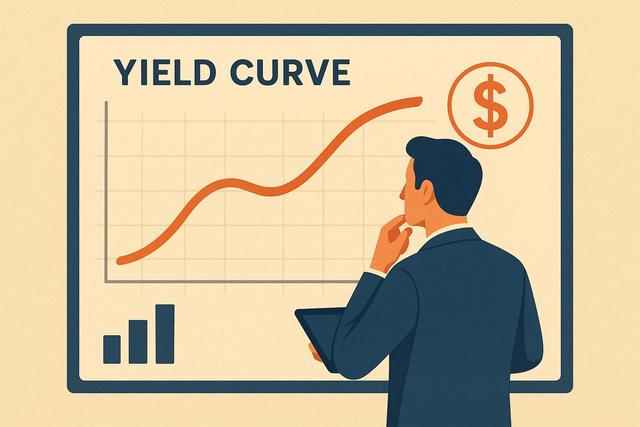
In the complex world of financial markets, understanding the yield curve is critical for traders and investors alike. As a macroeconomic tool, it not only reflects but also anticipates changes in economic momentum. Discerning the subtle signals sent by the yield curve can significantly influence trading strategies, mark opportunities, and alert to potential risks in the market.
Understanding the Yield Curve
The yield curve shows the relationship between interest rates and the maturity of debt for a given borrower in the market — usually the U.S. government. It's plotted using interest rates on bonds of different maturity periods.
Explaining Yield Curve Types
The three primary types of yield curves include:
- Normal Yield Curve: Long-term bonds have higher yields than short-term ones, indicating expectations of future economic growth.
- Flat or Humped Curve: Short and long-term rates are very close, predicting economic transition.
- Inverted Yield Curve: Long-term rates are lower than short-term ones, commonly interpreted as a precursor to recession.
Real-World Applications
The infamous inverted yield curve has predicted previous recessions accurately. For example, before the 2008 financial crisis, an inversion occurred in 2006, serving as a harbinger.
Yield Curve Inversions and Recessions
A yield curve inversion occurs when short-term borrowing costs exceed those for long-term debt. Historically, it signals potential recessions, but understanding this requires deeper insight.
Historical Data and Trends
According to Federal Reserve Bank data, since the 1950s, almost every U.S. recession was preceded by a yield curve inversion. Typically, recessions follow within 6 to 24 months of an inversion.
Strategic Insights for Traders
Traders can use yield curve predictions to:
- Adjust portfolios to less cyclical and safer assets during inversions.
- Explore stock sectors known for resilience during economic downturns.
Yield Curve and Market Signals
The curve is a vital indicator not just for stocks and bonds but also for gauging broader economic activities.
Sectoral Impacts
Certain sectors like utilities and consumer staples remain less sensitive to economic contractions, as signaled by the curve.
Case Study: Rate Hike Anticipation
In periods of expected rate hikes, such as in 2018, sectors like technology showed resilience despite a flattening curve as investors favoured growth.
Balancing Risks through Curve Analysis
Yield curve analysis helps traders identify potential risks and recalibrate investment strategies proactively.
Risk Mitigation Strategies
While cyclic investments may face price declines during inverted curves, risk can be managed by:
- Diversifying portfolios.
- Using curve patterns alongside other economic indicators.
Long-term Investment Insights
For long-term investors, inversions offer a chance to selectively increase weightings in undervalued sectors that may rebound strongly post-recession.
Predicting Future Economic Growth
The steepness of the yield curve can provide insights into future economic growth inflation.
Comparing Curves Globally
By comparing yield curves across different economies, such as Germany's 2019 inverted curve against the U.S., traders can predict international capital flow.
Actionable Opportunities
Anticipate rate shifts in domestic and global markets, aligning assets to benefit from predicted capital inflow, which could strengthen specific currencies or sectors.
Tools and Resources for Yield Curve Monitoring
Leveraging technology can offer a competitive advantage in parsing and interpreting yield curve data.
Digital Platforms
Tools like Bloomberg Terminal and the U.S. Department of the Treasury site provide up-to-date curve charts and historical data analysis.
Implementing Software Insights
Incorporate trading algorithms that adjust based on curve shapes, enhancing the speed and accuracy of decision-making.
Conclusion: Navigating Yield Curve Insights
Yield curve analysis provides powerful glimpses into both present economic health and future trends. By tailoring strategies through curve interpretation, traders can:
- Position themselves defensively against upcoming recessions.
- Explore growth opportunities in undervalued sectors.
- Utilize technology for real-time insights and decision-making.
To implement these insights, begin with consistent monitoring of the yield curve using trusted data sources. Carefully assess economic indicators in conjunction with curve shifts, and refine trading strategies accordingly to mitigate risks and maximize growth potential.

